Wednesday, 9 November 2011

Reflection of as a Document Designer

As a document designer, it is important to understand the cultural context of specific society before the writing planning. This is because the meaning making by the human to the document is based on the cultural knowledge in terms of beliefs, attitudes, and values (Shriver 1997, p. 372). Thus, such cultural consideration is served as a way to connect reader’s habits and expectations in the understanding of the publishing content.

Furthermore, as the advanced technology has advocated the prevalence of the Internet (it has lead to the emergence of new media such as microblogging and vlog), hence there is increasing importance of both verbal and visual structure in document designs nowadays. A combination of text, image, motion, and sound in the documents is significant to catching the eyes of busy readers (Kress and van Leeuwen 2006, p. 176).

The most important characteristic to the document designers is to have highest ethical communication. Especially when the topic discussion involves personal privacy, inaccurately report the news might destroy other’s reputation and status. Thus, the document designers should taking responsibility for these choices as the central of document designs, because the advancement of human well-being and advancement of knowledge are the ultimate purposes for publication (Lynch 2011, p. 1778).
What Do You Think as a Document Designer?


References

Kress, G & van Leeuwen, T 2006, Chapter 1: The Semiotic Landscape: Language and Visual Communication, Reading Images, pp. 16-44.

Lynch, A 2011, ‘Publication of Research: The Ethical Dimension’, Journal of Dental Research, vol. 73, no. 11, pp. 1778 -1782, <http://jdr.sagepub.com.ezlibproxy.unisa.edu.au/content/73/11/1778.full.pdf+html>.

Schriver, KA 1997, Chapter 6: The Interplay of Words and Pictures, Dynamics in Document Design: Creating Texts for Readers, pp. 361-441.

Tuesday, 8 November 2011

New Media Era – iPad Only?

Admittedly, the launching of iPad by Apple Inc. is fostering the new way for community to gain news information in real time. As compared to traditional media – newspaper, iPad is much flexible and accessible for people to get the information in anyplace, and anytime. Taranu et al. (2011, p. 354) in their article also stated that the Internet helps supplement the traditional news media outlets by providing additional access to news and information.

According to Trotter (2011), on Feb 2nd, 2011, Rupert Murdoch announced new iPad-only newspaper, which highlights the transition of news from the traditional “hold and fold” format to the Internet. As compared to traditional newspaper, the Daily has the depth and quality of a magazine, but is delivered daily like newspaper, and updated in real-time like the web. In other words, this iPad-only newspaper has successful integrated the representational and interactive elements (i.e. magazine, newspaper, and web). As mentioned by Kress and van Leeuwen (2006, p. 177), a combination of those elements that are made to relate to each other into multimodal texts as the means of layout are much appeal to the audiences.

Traditional Newspaper vs iPad-Only Newspaper, Which one You Prefer?

In my opinion, from the technological perspective, the iPad-only newspaper is much fulfills the status of citizens in the increasing growth in sovereignty, which the citizens is more actively participate in the media publication as compared to last decade. Through the iPad-only newspaper, the readers can make immediate responses and give suggestions to the topic discussion, and the publishers can take advantages by customise messages to the readers as interactions.

According to Naughton (2006, p. 6), the advanced information technology has provided formidable resources that make people become much more informed. As a result, they have always been articulate, thoughtful, and more controlled access to publication media. Therefore, iPad-only newspaper is fulfilling the reader’s habits and expectations as compared to traditional newspaper.

In new media era, the iPad-only newspaper is a new technology platform, which enables citizens actively create and exchange messages from interpersonal to mass communication. This movement is significant as it is the premise in the democracy society (Splichal 2009, p. 392).


References

Kress, G & van Leeuwen, T 2006, Chapter 1: The Semiotic Landscape: Language and Visual Communication, Reading Images, pp. 16-44.

Naughton, J 2006, ‘Blogging and the Emerging Media Ecosystem’, University of Oxford, viewed 6 November 2011, <http://reutersinstitute.politics.ox.ac.uk/fileadmin/documents/discussion/blogging.pdf>.

Splichal, S 2009, ‘'New' Media, 'Old' Theories: Does the (National) Public Melt into the Air of Global Governance?’, European Journal of Communication, vol. 24, no. 4, pp. 391-405, viewed 6 November 2011, <http://web.ebscohost.com.ezlibproxy.unisa.edu.au/ehost/detail?sid=9c2903ae-cc33-4a20-888e-f39ebeb1168e%40sessionmgr12&vid=4&hid=24>.

Taranu et al. 2011, ‘How Does The Internet-Based Media Restructure Communication and Subjectivity?’, Economics, Management, and Financial Market, vol. 6, no. 2, pp. 353-362, viewed 7 November 2011, <http://web.ebscohost.com.ezlibproxy.unisa.edu.au/ehost/pdfviewer/pdfviewer?vid=4&hid=21&sid=0dfad701-9684-4749-905c-66809d698827%40sessionmgr11>.

Trotter, C 2011, ‘iPad-Only Newspaper Furthers Media Trend’, The Cento, viewed 7 November 2011, <http://www.thecento.com/news/2011/feb/17/ipad-only-newspaper-furthers-media-trend/>.

Monday, 7 November 2011

Compatible Advertisement in Multi-Ethnicity Country

The cultural sensitivity is a significant factor consideration in the media publication of multi-ethnicity country such as Malaysia. Especially in this information technology’s era, the wrongly way to manage the cultural issues in publication will be overstated by the community through a variety of new media such as Facebook and Twitter – two of most popular microblogging, and widely spread boundless.

According to Yow (2011), this Ramadan ad is tries to appeal non-Muslim to have appropriate behavior during the Muslim fasting month, as the respect and understanding of the significance of Ramadan. However, this ad eventually failed to achieve the original purposes, and has intensely opposed by the minority community in Malaysia.

According to Kress and van Leeuwen (2006, p. 41), individuals use a range of modes of representation in their meaning making process, and each mode has specific social valuation based on particular cultural knowledge, beliefs, attitudes, and value. In my opinion, this ad has created offensive meaning to non-Muslim especially Chinese, as a ‘Chinese girl’ is applying for inappropriate behavior during the Ramadan in the advertisement. Thus, the main concept of this advertisement is failed to be translated by the community in their cultural context, which has caused the ad resisted by the community.

As supported by Schriver (1997, p. 362), document designers need to take into account for both technological issues for organizing and displaying documents, and also viewer’s standpoint in interaction with documents. Otherwise, solely concerns on technological issues without consideration of viewer’s experience might lead to negative consequences in the document design.

2011 Ramadan TV Ads in Malaysia
                                                         (Source: Youtube)

Furthermore, the emergence of new media especially through microblogging such as Facebook has lead this ad widely spread in a very short time by the community. As suggested by Splichal (2009, p. 392), the new interactive virtual spaces, the Internet, substantially increased the feasibility of citizens’ participation in public discourse beyond national boundaries. For this Ramadan ad, there are large amount of criticize messages are flooded with Facebook page, which derived from both domestic and abroad Malaysians. Nguyen (2009, p. 24) also suggested that one of most powerful feature of new media vehicles is it facilitates the community sharing.

Overall, it is clearly to see that such new form of media is driving an interactive communication in the ways of publication, in which the audience has substantial power towards the contents of publication (Naughton 2006, p. 7).


References

Kress, G & van Leeuwen, T 2006, Chapter 1: The Semiotic Landscape: Language and Visual Communication, Reading Images, pp. 16-44.

Lee, P 2011, ‘8TV’s strange way of saying sorry’, Free Malaysia Today, viewed 6 November 2011, <http://www.freemalaysiatoday.com/2011/08/03/8tvs-strange-way-of-saying-sorry/>.

Lee, P 2011, ‘Ramadan Ads: Of Armpits and Morality’, Free Malaysia Today, viewed 6 November 2011, <http://www.freemalaysiatoday.com/2011/08/02/ramadan-ads-of-armpits-and-morality/>.

Naughton, J 2006, ‘Blogging and the Emerging Media Ecosystem’, University of Oxford, viewed 6 November 2011, <http://reutersinstitute.politics.ox.ac.uk/fileadmin/documents/discussion/blogging.pdf>.

News: Malaysia TV Station Ramadan Ads Sparks Debate 2011, YouTube video, Public Service Announcements (PSA), 3 August, viewed 6 November 2011, <http://www.youtube.com/watch?v=ke7p5rp-nbI>.

Nguyen, JD 2009, ‘New Media Evolution: Business and IP Issues for Today’s Evolving Media World’, The Computer and Internet Lawyer, vol. 26, no. 9, pp. 18-24, <http://download.wolterskluwerlb.com/p-1585-new-media-evolution-business-and-ip-issues-for-todays-evolving-media-world.aspx>.

Schriver, KA 1997, Chapter 6: The Interplay of Words and Pictures, Dynamics in Document Design: Creating Texts for Readers, pp. 361-441.

Splichal, S 2009, ‘'New' Media, 'Old' Theories: Does the (National) Public Melt into the Air of Global Governance?’, European Journal of Communication, vol. 24, no. 4, pp. 391-405, viewed 6 November 2011, <http://web.ebscohost.com.ezlibproxy.unisa.edu.au/ehost/detail?sid=9c2903ae-cc33-4a20-888e-f39ebeb1168e%40sessionmgr12&vid=4&hid=24>.

Yow, HC 2011, Media Prima Pills Out 'Racist' Ramadan Ads, The Malaysian Insider, viewed 5 November 2011, <http://www.themalaysianinsider.com/print/malaysia/media-prima-pulls-out-racist-ramadan-ads/>.

Sunday, 6 November 2011

Plagiarism – the Infringing on Copyrights of Online Publications

As a student educated in tertiary institution, there are high probability for me to access some authorized and copyrighted materials through the Internet. These online materials are significant for me to write a high credible and trustworthy essay to support my personally argument. However, the plagiarising issues might arise as inappropriate using those materials without proper citations and referencing.

According to Pichon (2011), as the prevalence of the Internet usage, the blurring line is created about the copyrighted content and free content materials which are posted online for both publishers and commentators. As a result, many plagiarising cases arise from such context. As supported by Atkins and Nelson (2001, p. 101) in their article that ‘is the indisputable fact that the Internet’s rich repository of online texts provides an unprecedented opportunity for plagiarism.

The prevalence of the Internet has increased the access to texts, people are become more easily involve in plagiarising cases in this 21stcentury as the result of revolution of text access, from print-based material such as newspaper since last decade to online material.

The Internet vs Plagiarism Issues
                                                                         (Source: Youtube)

In my opinion, the boundless access to text from Internet sources has made this virtual world become uncontrolled by anyone, include the publishers of materials. Thus, this textual revolution has changing the mind of people that they can easily ‘copy & paste’ other’s work without violent the law, as compared to traditional media such as newspapers which are strictly controlled by authorised parties. As supported by Howard (2007, p. 8) that new textual circumstances have revised the cultural thinking and then to lead a relaxation of standards in writing and texting by many students nowadays.

However, as ethical writers, it is important for them to have moral resistance and to put effort to recognise sources fully in their writing. Using this weblog as example, all referencing sources need to put in citation and quotation to prevent plagiarism penalised and to enhance writing’s credibility. As if unethical writers have the ways to access online text and plagiarise it, then the gate-keeping teachers can also access the plagiarised paragraph and catch the offenders (Howard 2007, p. 13). For example, Turnitin.com, is a plagiarism prevention system used in University of South Australia.

Hyperlink is Used in This Weblog to Show All Referencing Sources

   
References

Atkins, T & Nelson, Gene 2001, ‘Plagiarism and the Internet: Turning the Tables’, English Journal, vol. 90, no. 4, pp. 101-104, viewed 7 November, <http://web.ebscohost.com.ezlibproxy.unisa.edu.au/ehost/pdfviewer/pdfviewer?vid=10&hid=15&sid=e1435048-aff3-44e6-b624-7df440b18e1f%40sessionmgr10>.

Howard, RM 2007, ‘Understanding Internet Plagiarism’, Computers and Composition, vol. 24, pp. 3-15, viewed 7 November 2011, <http://wolff-tfw-fall07.pbworks.com/f/howard-internet-plagiarism.pdf>.

Online Plagiarism Amanda Critical Thinking New Media 2011, YouTube video, Public Service Announcements (PSA), 3 August, viewed 6 November 2011, <http://www.youtube.com/watch?v=teUaPeciUOM>.

Pichon, F 2011, Copyrighted Material: Fair and Unfair Use, EditorsWeblog.org, viewed 7 November 2011, <http://www.editorsweblog.org/newsrooms_and_journalism/2011/06/copyrighted_material_fair_and_unfair_use.php>.

Turnitin.com 2011, The Global Leader in Addressing Plagiarism and Delivering Rich Feedback, viewed 7 November 2011, <https://turnitin.com/static/index.php>.

Saturday, 5 November 2011

Female Discrimination - Prejudicial Treatment in Media Contents

As a female, it is intolerant for me to accept any discriminating attempts, behaviours, and actions toward female in this 21st century. As a highly educated intellectual, it should be known that many negative consequence will be arise in society as the discrimination issue is incited by someone or some media.

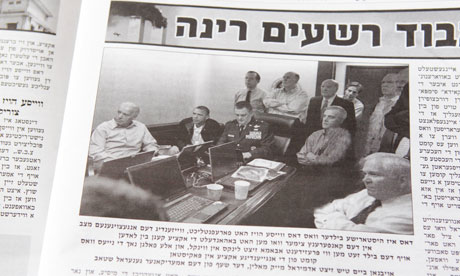
The New York newspaper - Di Tzeitung digitally removed Hillary Clinton and Audrey Tomason from a photograph of Barack Obama and his staffs monitoring the raid by navy Seals that killed Osama bin Laden.

Original Version from White House
(Source: White House)
Edited Version by Di Tzetung
(Source: Di Tzetung)
Apparently, the editorial policy under Di Tzetung has pushing down women as secondary and passive roles as compared with men, which is tend to create an unbalanced gender portrayal for female in public sphere. As supported by Lobo and Cabecinhas (2010, p. 340), the gender asymmetries in media content are mainly caused by the under-representation of women in media professions. This is because women are always either given invisible roles or described based on their stereotyped characteristics in the media, which lead women to ‘symbolic annihilation’ – less representative in the society (Lobo and Cabecinhas 2010, p. 339).

According to Van Zoonen (1994, p. 33), gender issues is not a fixed property of individuals, but as part of an ongoing process by which subjects are constituted, thus gender is to be seen as a discursive construction. In this article, Di Tzeitung clarified that its readers would believe women will be appreciated as they have excellent capabilities and talents, but not based on their appearance, thus female image is omitted in this publication. However, it is a one-sided assumption by Di Tzetung.

In my opinions, such assumption will damage to women’s lives as these messages reveal the presence of prejudice treatment to gender in the social structure and in individual worldviews. It won’t be surprising if it occurs, because media has crucial task of rendering the unfamiliar into the common (Wilson et al. 2011, p. 23).

Therefore, rather than to mixed with gender matters within the discussion, it is more important for a journalist to take into account the manipulation of the facts, as journalists cannot alter the truth through falsification of data provided (Lynch 2011, p. 1780) .


References

Coleman, RRM & Yochim, EC 2008, ‘Symbolic Annihilation’, The International Encyclopedia of Communication, viewed 6 November 2011, <http://sitemaker.umich.edu/rrmc/files/icae_v11_01.pdf>.

Lobo, P & Cabecinhas, R 2010, ‘The Negotiation of Meanings in the Evening News: Towards an Understanding of Gender Disadvantages in the Access to the Public Debate’, International Communication Gazette, vol. 72, no. 4-5, pp. 339-358, viewed 5 November 2011, <http://gaz.sagepub.com.ezlibproxy.unisa.edu.au/content/72/4-5/339.full.pdf+html>.

Lynch, A 2011, ‘Publication of Research: The Ethical Dimension’, Journal of Dental Research, vol. 73, no. 11, pp. 1778 -1782, viewed 6 November 2011, <http://jdr.sagepub.com.ezlibproxy.unisa.edu.au/content/73/11/1778.full.pdf+html>.

The Guardian 2011, ‘Orthodox Jewish Paper Apologises for Hillary Clinton Deletion’, Associated Press, 10 May, viewed 5 November 2011, <http://www.guardian.co.uk/world/2011/may/10/jewish-paper-apologises-hillary-clinton>.

Wilson, et al. 2011, ‘What is Your Social Media Strategy?’, Harvard Business Review, viewed 5 November 2011, <http://web.ebscohost.com.ezlibproxy.unisa.edu.au/ehost/pdfviewer/pdfviewer?vid=10&hid=21&sid=544c2625-3888-4e19-8bdb-ca8e72660845%40sessionmgr13>.

Thursday, 25 August 2011

Screen versus Print Document Design

Discuss briefly with application to document examples, three main considerations of designing (involving layout & writing structures) for the screen versus print documents.
The three main considerations of designing for the Screen Documents versus Print Documents include:-

 
Factor #1 Documents Structure
According to Farkas (2005, p. 10), the print documents primarily through the use of headings to make sure the document is made explicit to the readers. For example, a corporate report may use headings and also sub-heading to describe different divisional statement within the organisation.


A Sample of Corporate Report For Yamana
(Source: Yamana 2011)
On the other hand, Farkas (2005, p.11) further suggested the use of links is the most important means of establishing explicit structure for screen documents. Using this weblog as example, the hyperlink is necessary to show the reference sources of the codification to prevent plagiarism penalised.

 
Factor #2 Documents Layout
Print document is 2-dimensional design, which document is displayed in pages, but substantial interplay between different spreads is rare (Nielsen 1999). Furthermore, Nielsen (1999) also stated that there is a fixed size canvas for each view of design unit. For example, often a big canvas when designing newspapers.

The Layout of Spanish Newspaper
Besides, the screen document is 1-dimensional design (Nielsen 1999). Fundamentally, it is a scrolling experience for the user, as the layout of this weblog. However, there is different ways of scrolling for different users based on their reading experience (Nielsen 1999).


Factor #3 Documents Content
The content of print documents is finalised before the publication (Kardys 2010). It means the layout will rely on a predetermined amount of copy, which is a typical description for newspaper.

However, the content of screen document is ever changing (Kardys 2010). In other words, a solid web design has to be able to accommodate different types and amounts of content.


References

Farkas, DK 2005, ‘Explicit Structure in Print and On-Screen Documents’, Technical Communication Quarterly, vol.14, no.1, pp. 9-30, <http://faculty.washington.edu/farkas/Farkas-ExplicitStructure-TCQ05.pdf>.

Kardys,D 2010, Difference between Print and Web Design, viewed 25 August 2010, <http://www.wsol.com/White_Board/Design_Advice/PrintVsWeb.aspx>.

Nielsen, J 1999, Difference between Print Design and Web Design, viewed 25 August 2010, <http://www.useit.com/alertbox/990124.html>.

Wednesday, 24 August 2011

New Forms of Media Publishing

Discuss in-depth the newest trends/issues pertaining to one new publishing form and relate to how it has altered communication in a new media ecosystem.

As rapid expansion of the internet in recent years has caused the emergence of new media, which includes online journalism, vlog such as Youtube, Micro Blogging such as Facebook, and Twitter, and Social Networking sites are the latest trends (Thorsten et al. 2010, p.311).

New Media of Communications
According to Sula (2011, p. 2), in the business environment, the social networking, for instance, Facebook has encouraged marketers revamping the marketing strategy from mass orientation to a customised or individualised orientation.

This is because a two-way communication will be built up between the customers and the company through Facebook. By this way, customers are allowed to share their experience, and information will be exchanged in a real time. Thus, customer relationship management has been enhanced, and then allow the company better serves their customer’s needs and wants.

As a consequence of a more effective social connection by the new media, it has caused marketers shift from traditional media such as TV, newspaper, and magazine to a new media trend as their main communicational tool with key customers (Thorsten et al. 2010, p.311).

Therefore, the moving from traditional media to new media has shifted human’s learning process as information receiver from print-based text to multimodal text, which involves the integration of spoken or written language, images, music and sound of communication rather than single mode (written text) of communication (Walsh 2006, p. 24).

Thus via Facebook, the customers are freedom to choose the pathway of communication (by photos, or by written text, or by emotion icon) with the company to make an interaction, but not just get the information from a piece of paper as in the traditional media such as newspaper.


Asus using Facebook as Communication Tool with Customers
(Source: Facebook 2011)

References

Sula, JG 2011, ‘New Media Impact on Society’, viewed 24 August 2011, <http://snl.depaul.edu/writing/New_Media's_Impact_on_Society.pdf>.

Thorsten, et al. 2010, ‘The Impact of New Media on Customer Relationships’, Journal of Service Research, vol. 13, no.3, pp. 311-330, <http://jsr.sagepub.com/content/13/3/311.full.pdf+html>.

Walsh, M 2006, ‘‘The Textual Shift’: Examining the Reading Process with Print, Visual and Multimodal Texts’, Australian Journal of Language and Literacy, vol. 29, no. 1, pp. 24-37 <http://search.informit.com.au/documentSummary;dn=063500573261111;res=IELHSS>.

Tuesday, 23 August 2011

Explain Briefly Types of Blogging Communities & Methods to Build Blogging Communities. Then, Discuss the Structure of One Blogging Community in Brief.

To define what is a Blogging Community? How do bloggers create a community?
Blood (citied in Branum 2001) defines blogging community as ‘bloggers compiled lists of other blogs that they found interesting and programmers began to develop tools to mechanize the process of frequently updating blogs.’

Thus, in the blogging communities, bloggers can exchange ideas and comments for the purposes of socialise, make friends, etc (AirAsia Pesta Blogging Communities Trip 2009).

As suggested by Webpodge (2007), one of methods to create blogging community is through DrupalThere are several steps to be followed to create a blogging community:-

Step #1 Install Drupal
Step #2 Activate the Blog Module
Step #3 Install TinyMCE WYSISWYG Editor Module
Step #4 Install Image Attach Module
Step #5 Embrace Your Creativity!

Drupal - Powering Millions of Websites and Applications
(Source: Drupal 2011)

Explain Briefly the three types of Blogging Communities. Then, Discuss by Applying onto One Blog Example, the Structure of ONE blogging community from Nancy White’s analysis.

According to White (2006) in her article, there are three main patterns of blogging communities, they are:-

Type #1 Single Blog/Blogger Centric Communities

(Source: White 2006)
This blog is owned by alone owner or organisation. The rules and norms of engagement to maintain the ‘discipline’ of online discussion would be set up by the owner, the central blogger’s control.

In subject matter, conversational topic will be derived from central blogger, while commenters can either giving their response or run away without any controllable to the topic discussion.


Type #2 Central Connecting Topic Communities

(Source: White 2006)
This blogging community formed from a variety of blog’s links into a network system. The network shared a common passion or topic with a particular party or issue identification. There is no single technological platform for topic centric communities.

Global Voices which aggregates blogs from developing countries for the purpose to get attention from the main stream media about the issues in those countries, that I believe is a representative example for topic centric communities. For example, a heated discussion in Global Voices for Malaysia by 2011 is Bersih 2.0 Rally 709.

Global Voice - Citizen Media Stories from Around the World

Type #3 Boundaried Communities

(Source: White 2006)
Boundaried communities are collections of blogs, where blog readers hosted on a single site or platform. Typically members are offered the chance to create a blog through register and ‘join’ the community.


References

AirAsia Pesta Blogging Communities Trip 2009, What is A Blogging Community?, viewed 23 August 2011, < http://www.thetraveltart.com/what-is-a-blogging-community/>.

Branum, JM 2001, ‘The Blogging Phenomenon: An Overview and Theoretical Consideration’, Theories of Mass Communication, Southwest Texas State University, <http://www.ajy.net/jmb/blogphenomenon.htm >.

Webpodge, 2007, How to Create a Blog Community Website with Drupal, viewed 23 August 2011, <http://webpodge.com/2007/03/02/how-to-create-a-blog-community-website-with-drupal/>.

White, N 2006, Blogs and Community: Launching a New Paradigm for Online Community?, The Knowledge Tree, viewed 24 August 2011, <http://kt.flexiblelearning.net.au/tkt2006/edition-11-editorial/blogs-and-community-%E2%80%93-launching-a-new-paradigm-for-online-community>.